Sustainable and efficient morts, sludge and faeces removal in aquaculture: How compressed air is part of the innovative solution
The adoption of airlift collection systems to remove morts from sea-based aquaculture sites has increased in recent times thanks to the reliability, safety and efficiency they offer. The latest advancements are now pushing the boundaries of this technology even further, aiding the removal of sludge and fish faeces. Removing these organic waste sources is essential for sustainable aquaculture.
Fish mortalities (morts) are a natural and unavoidable part of both wild ecosystems and aquaculture. Fish, unlike mammals, produce a high volume of offspring, mostly in the form of eggs. In the wild, however, the viability of these eggs is low, with only about 1% of fish typically reaching adulthood. The weaker fish are often naturally removed by predators before they can die from their inherent weaknesses.
In aquaculture, particularly with salmon, we see a much higher survival rate, typically around 80%. This means most fish thrive, but a smaller portion - about 20% - unfortunately aren't strong enough to grow to adulthood and will die during the grow-out cycle. Since predators aren't present in aquaculture environments, it is important that these morts are removed to ensure they do not become vectors of disease and infection, which would pose a serious risk to the healthy fish population.
Traditional morts removal
Aquaculture operations have always had to manage morts in order to maintain healthy ecosystems. Traditional morts removal requires divers to be dispatched into net pens to manually place the morts in baskets. These baskets are then lifted out of the water by hand. This method is labour intensive and time consuming, and often results in long retention times of the morts within the enclosures. This is far from ideal, because the longer morts remain in net pens, the more likely they are to pass disease onto the healthy fish population.
As aquaculture moved to locations that were deeper, larger and more exposed, the safety and practicality of using divers became a bigger concern. So what was the solution?
Airlift collection systems provide an innovative solution
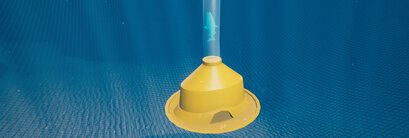
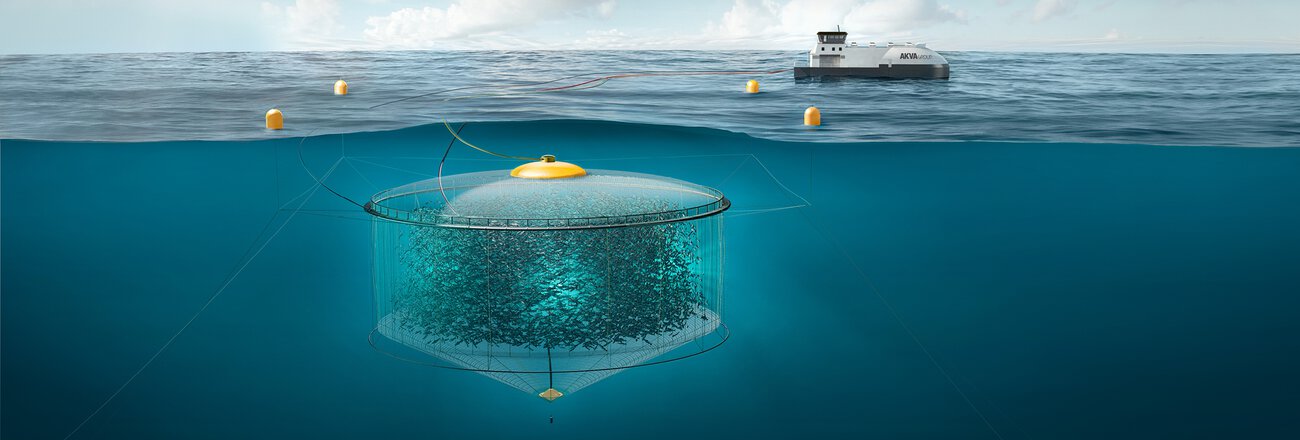
Airlift collection systems presented an innovative solution to traditional morts removal. Here, compressed air plays a critical role. A cone is installed in the deepest part of a net pen. This is connected to a hose through which compressed air is blown. Thanks to the airlift pump principle, the morts are efficiently retrieved and transported from the bottom of the net pen, through the hose to a centralised collection device on a support barge or boat.
The condition of the morts are assessed and statistical analyses conducted. Once collected, the morts can then be turned into silage through a process that simultaneously eliminates bacteria and infections. This silage offers multiple potential uses, creating additional value streams from what would otherwise be waste.
Morts removal using airlift collection systems has become popular for a number of reasons:
- Safely meets challenges of sea-based farming: The dangers associated with traditional morts collection are eliminated, making it especially appealing in remote and hostile environments.
- Efficient and reliable process: The process is far quicker and less labour-intensive than the traditional approach.
- Assists in keeping mortalities low: Morts are removed sooner rather than later, helping to prevent the spread of disease and keeping mortalities low.
- Provides better protection for the wider marine environment: Preventing the spread of disease by the quick removal of morts also prevents the potential spread of disease amongst the wider marine environment.
- Accurate mortality reporting: Frequent morts removal allows for more accurate morts reporting, which is essential for meeting mandatory regulatory requirements in some regions. Information about the standing biomass can be acquired, allowing feed to be adjusted accordingly for minimal waste.
The next frontier: utilising airlift collection systems to collect sludge and faeces
When it comes to sustainable aquaculture, managing waste products like sludge and fish faeces is critical. These organic accumulations on the sea floor attract decomposing bacteria, which consume vast amounts of oxygen during their metabolic processes. This can lead to the formation of anoxic zones – areas directly under the farm where oxygen levels are extremely low or non-existent – potentially impacting marine life.
Advancements in airlift collection systems have presented a solution to address these challenges. Initial systems, launched a few years ago, were designed for the collection of both morts and sludge, directly mitigating sludge’s contribution to seabed anoxia. However, another significant challenge emerged with fish faeces.
Historically, faeces primarily required management in land-based facilities. Open net pen aquaculture, traditionally located in areas with strong currents, often relied on natural dilution, which generally caused limited environmental impact as the habitat's loading capacity was sufficient. Yet, in some cases, farm locations were not ideal, leading to faeces accumulating on the seabed. When these accumulations exceeded the habitat's natural capacity, they, like sludge, contributed to the very same problem of anoxic zones and a significant reduction in local species diversity.
Consequently, some regions and countries now mandate independent seabed monitoring for open net pen aquaculture. If monitoring shows deteriorating seabed conditions, farmers must reduce the biomass. In extreme cases, the farm site must be taken out of operation.
Airlift collection systems are now rising to the challenge of faeces removal. Following collection, the sludge or faeces (depending on which is being collected) is separated from the water using a band filter. The thickened matter is then stored in a floating tank. Once full, the matter can be pumped into a boat and delivered, for example, to a biogas plant for gas production, transforming another waste product into a valuable resource.By removing faeces, the pressure on the ecosystem is reduced, and farmers are able to maintain their full fish quota. Now, with the trend of submersible farms in salmon aquaculture, where completely closed net pens are employed, morts removal by compressed air becomes the only viable option for efficiently and quickly removing mortalities.
Conclusion
Morts, sludge, and faeces removal are imperative for both the environmental responsibility and ecological viability of aquaculture operations, which in turn are crucial for their long-term economic sustainability. Sophisticated airlift collection systems, utilising compressed air, lead the way in providing an efficient and effective method for collecting these organic wastes.
By enabling the conversion of these collected materials into valuable resources - such as silage and biogas - these systems play a direct role in fostering a circular economy within aquaculture. These measures are therefore essential, significantly contributing to truly sustainable aquaculture practices.
Illustration courtesy of AKVA group.